

Discovering that an online investment platform may have deceived you can be a stressful and confusing experience. You may have deposited money expecting to receive investment returns, only to find that your account is restricted, your withdrawal requests are ignored, or the platform is asking for additional payments before releasing your funds.
If you suspect that you have been affected by an investment scam, taking the right steps can help protect your remaining funds, preserve important evidence and support any investigation or reporting process.
At COUPGUARD LIMITED, we provide financial investigation and consulting services for individuals and businesses dealing with suspected investment fraud, cryptocurrency losses and disputed financial transactions. This guide explains the practical steps you can take if you believe an online investment platform has scammed you.
1. Stop Sending Additional Money
One of the first steps after identifying a possible investment scam is to avoid making further payments to the platform or the people operating it.
Fraudulent operators may claim that you need to pay additional charges before you can withdraw your balance. These demands may be described as taxes, account verification fees, liquidity charges, security deposits or transaction clearance fees.
A request for an unexpected payment to release supposed investment profits is a serious warning sign. Paying the requested amount does not guarantee that your funds will be released, and further payments may increase your losses.
If you have already made several payments, keep the records. Do not delete messages or correspondence, even if you feel embarrassed about what happened.
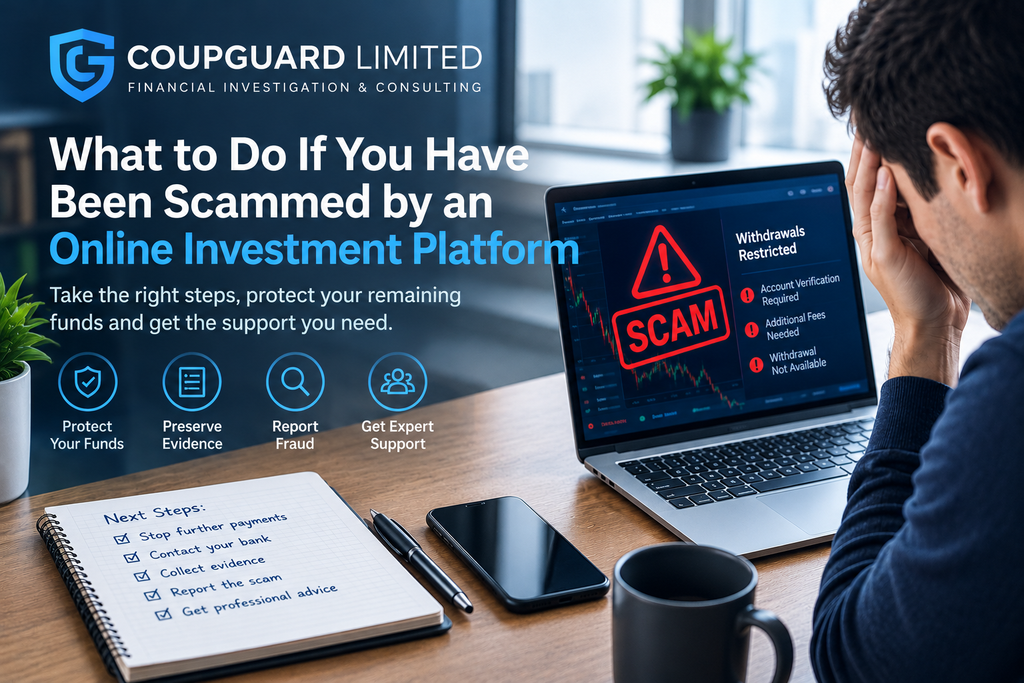
2. Contact Your Bank or Payment Provider
If you transferred money through a bank, debit card, credit card, or payment service, contact the relevant provider as soon as possible.
Depending on the circumstances, your provider may be able to investigate the transaction, attempt a recall, explain a dispute process, or take steps to protect your account.
If you paid using cryptocurrency, contact the exchange or service you used to purchase or transfer the assets. Although cryptocurrency transfers are generally irreversible, the exchange may be able to review relevant account activity or explain what reporting options are available.
Keep a record of your communications, including reference numbers, dates, and any instructions you receive.
There is no guarantee that a bank, payment provider, or cryptocurrency exchange will be able to recover the money. However, reporting the incident promptly allows you to understand which options may still be available.
3. Preserve All Evidence Related to the Investment
Evidence can be important when reporting suspected fraud, reviewing transactions or preparing a case for further assessment.
Start collecting the information you already have. Useful records may include:
- Bank statements and payment confirmations.
- Cryptocurrency wallet addresses and transaction hashes.
- Screenshots of your trading account and displayed balances.
- Emails, text messages and chat conversations with platform representatives.
- Records of withdrawal requests and any responses received.
- Receipts or messages relating to additional fees.
- Website addresses, account identifiers and the names used by the people who contacted you.
Create a timeline showing when you opened the account, deposited funds, requested withdrawals and received any suspicious demands.
Do not assume that a balance displayed on a trading dashboard represents money that is actually held in an account for you. Independent verification may be necessary.
Never share your banking passwords, cryptocurrency seed phrase or private keys with someone claiming to investigate your case.
4. Look for Warning Signs of Investment Fraud
Not every investment dispute is necessarily fraud, but certain patterns deserve careful attention.
Common warning signs include:
Unrealistic promises of profit: A platform or representative guarantees unusually high returns while minimizing or dismissing the risks.
Withdrawal restrictions: You are unable to withdraw your funds, and the explanation changes whenever you ask for an update.
Unexpected payment demands: You are told to pay additional fees, taxes or deposits before your withdrawal can proceed.
Pressure to invest more: A representative repeatedly encourages you to deposit more money to unlock benefits or recover earlier losses.
Unverified regulatory claims: The platform claims to be licensed or regulated, but the details cannot be independently confirmed with the relevant regulator.
If you recognize several of these signs, avoid making assumptions based solely on the platform’s appearance or its displayed account balance. Preserve the available evidence and seek independent verification.
5. Report the Suspected Fraud to the Appropriate Authorities
Reporting suspected investment fraud can create an official record and help relevant authorities assess the incident.
The appropriate reporting channel depends on where you live, where the payment was sent and which institutions or platforms were involved.
When making a report, provide a clear account of what happened, the amount involved, the payment dates and the records supporting your complaint. Keep copies of submitted documents and any report reference numbers.
If the case involves several countries, more than one authority or institution may be relevant. The appropriate route will depend on the specific facts and applicable procedures.
Reporting does not guarantee that an investigation will be opened or that funds will be recovered. Nevertheless, accurate documentation can help you explain the circumstances and understand the available next steps.
6. Be Careful of Follow-Up Recovery Scams
People who have already lost money to investment fraud may become targets for another type of scam.
In some cases, individuals or companies approach previous victims claiming that they can recover their funds quickly. They may promise guaranteed results, claim to have located the money or demand an upfront payment to release recovered assets.
These claims should be treated with caution.
Before engaging a financial investigation or consulting service, check its identity, business information, service terms, fees and the evidence supporting any claims it makes.
Be particularly cautious of guaranteed recovery promises, pressure to pay immediately, requests for cryptocurrency transfers to unknown wallets and demands for passwords or private keys.
A legitimate assessment should explain what can actually be examined, what limitations exist and what outcomes cannot be guaranteed.
No service provider can guarantee that money lost through an investment scam will be recovered.
7. Consider an Independent Financial Case Assessment
When the circumstances are complicated, an independent review of the available records may help you understand the transaction history and identify questions that need further investigation.
A financial case assessment may involve reviewing payment records, correspondence, account statements, cryptocurrency transaction details and the timeline of events.
Depending on the available information, this work may help identify inconsistencies, organize the evidence and outline possible reporting or investigative options.
At COUPGUARD LIMITED, our financial investigation and consulting services focus on reviewing documentation, examining transaction records and helping clients understand their circumstances and possible next steps.
We do not guarantee the recovery of lost funds, and an assessment does not replace the work of banks, law enforcement agencies, regulators or qualified legal professionals.
How COUPGUARD LIMITED May Help
If you have experienced a suspicious online investment, cryptocurrency loss or disputed financial transaction, understanding what happened is an important starting point.
COUPGUARD LIMITED provides financial investigation and consulting support for individuals and businesses seeking a clearer understanding of suspected financial fraud.
Depending on the circumstances, our work may include:
- Organizing evidence into a clear timeline.
- Examining cryptocurrency transaction information where relevant.
- Identifying gaps or inconsistencies in the available documentation.
- Explaining possible reporting routes and procedural considerations.
- Helping prepare an organized summary of the case for relevant institutions or professionals.
Every case is different. The scope of any work depends on the information available, the nature of the matter and the services agreed in writing.
An initial case assessment should help establish what information is available, what questions remain unanswered and whether further investigation may be appropriate.

Take the Next Step With Clear Information
If you believe you have been affected by online investment fraud, you do not need to understand every detail before beginning to organize your records.
Start by preserving the evidence, documenting what happened and avoiding further payments that you cannot independently verify.
If you suspect you’ve been scammed by an online investment platform, one of your first steps should be verifying whether financial regulators have already issued consumer warnings against them. Regulators globally maintain databases of unauthorized brokers and fraudulent platforms. For instance, Canadian residents can search the CSA Investor Alerts Database while UK residents can consult the FCA’s Unauthorised Firms Warning List.
.
If you need help understanding your situation, COUPGUARD LIMITED can assess the information you provide and explain whether further financial investigation or consulting support may be appropriate.
Request a Case Assessment
Visit COUPGUARD LIMITED to learn more about our services and submit your case details for an initial assessment.
Request a free case review